
There’s a certain allure that comes with simmering dreams into breakfast—the kind that ignites your senses and brings a touch of elegance to your morning routine. Enter French Baked Eggs, or oeufs cocotte, a delightful dish that transforms simple ingredients into a charming culinary experience. With a luscious base of crème fraîche supporting perfectly baked eggs, all harmonized with fresh herbs and your choice of cheese, this recipe isn’t just a quick fix; it’s a customizable masterpiece ready to impress at brunches or cozy dinners. Whipping up these creamy eggs means embracing both simplicity and sophistication, making it a go-to for anyone looking to elevate their cooking game. Curious to discover how easily you can make this delectable dish at home? Let’s get cooking!
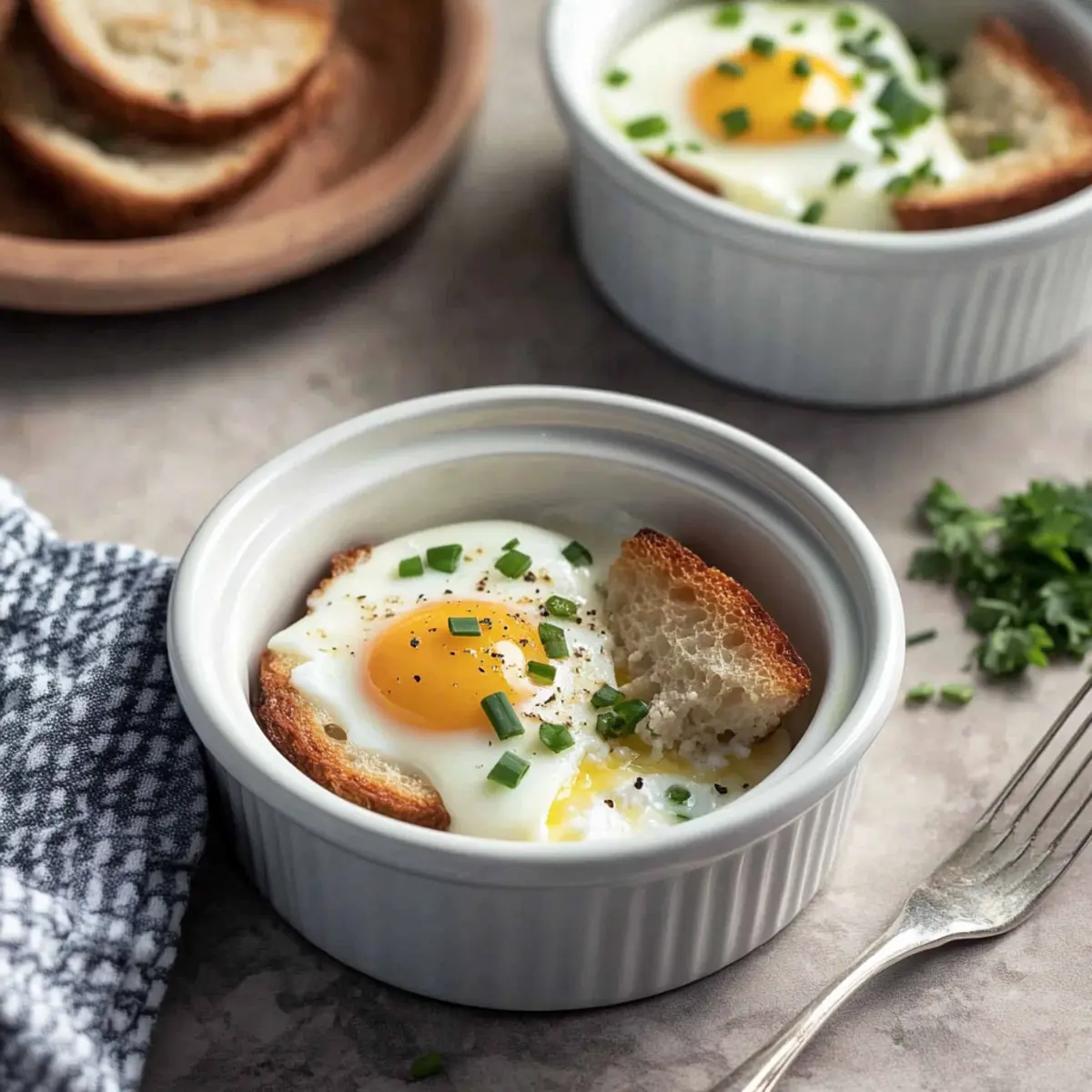
Why Are French Baked Eggs Irresistible?
Elegance Meets Ease: This recipe combines simple ingredients to create a dish that feels gourmet without the fuss.
Customizable at Heart: Make it your own by swapping in your favorite cheeses or seasonal vegetables, ensuring every bite is uniquely yours.
Perfect for Any Occasion: Ideal for brunch with friends or a cozy dinner, these baked eggs are sure to impress and satisfy.
Healthy Indulgence: With protein-packed eggs and a rich base of crème fraîche, it’s a nourishing choice that doesn’t skimp on flavor.
Effortless Presentation: Serve these in ramekins for an elegant touch, offering your guests a delightful visual treat that looks as amazing as it tastes!
Explore more delicious dishes like my Baked Cream Cheese Spaghetti Casserole to keep your meal rotations exciting!
Bold French Baked Eggs Ingredients
For the Ramekins
• Butter – coating the ramekins prevents sticking; olive oil is a healthier choice.
• Crème Fraîche – adds creamy richness; swap with heavy cream or full-fat Greek yogurt if necessary.
For the Eggs
• Eggs – fresh large eggs are best; bring them to room temperature for even baking.
For the Flavor
• Goat Cheese – brings tanginess and depth; feel free to use feta, ricotta, or cheddar instead.
• Chives & Parsley – fresh herbs elevate the dish; consider thyme or dill for a different twist.
• Salt & Pepper – essential for seasoning; adjust according to your taste preferences.
Feel free to customize these ingredients for your perfect French Baked Eggs experience!
Step‑by‑Step Instructions for French Baked Eggs
Step 1: Preheat Oven and Prepare Water Bath
Begin by preheating your oven to 350°F (175°C). While the oven heats, fill a kettle with water and bring it to a boil. This hot water will create a gentle steam bath for the ramekins, ensuring your French Baked Eggs cook evenly and retain their creamy texture.
Step 2: Coat the Ramekins
Generously coat four 4 to 5-ounce ramekins with softened butter using a pastry brush or your fingers. Ensure each ramekin is well-greased to prevent sticking. This will create a lovely, non-stick surface for your delectable baked eggs, allowing for easy serving and cleaning later on.
Step 3: Add the Crème Fraîche
Spoon an even layer of crème fraîche (or an alternative like heavy cream or full-fat Greek yogurt) into each prepared ramekin. Aim for about 1-2 tablespoons in each cup, creating a rich foundation for the eggs. This creamy layer will help give your French Baked Eggs a delightful texture and flavor.
Step 4: Crack in the Eggs
Carefully crack one large egg into each ramekin, taking care not to break the yolk. The eggs should ideally be at room temperature for the best results. This step is crucial, as the perfect, runny yolk will create a luscious sauce when baked, complementing the rich crème fraîche beautifully.
Step 5: Season and Add Cheese
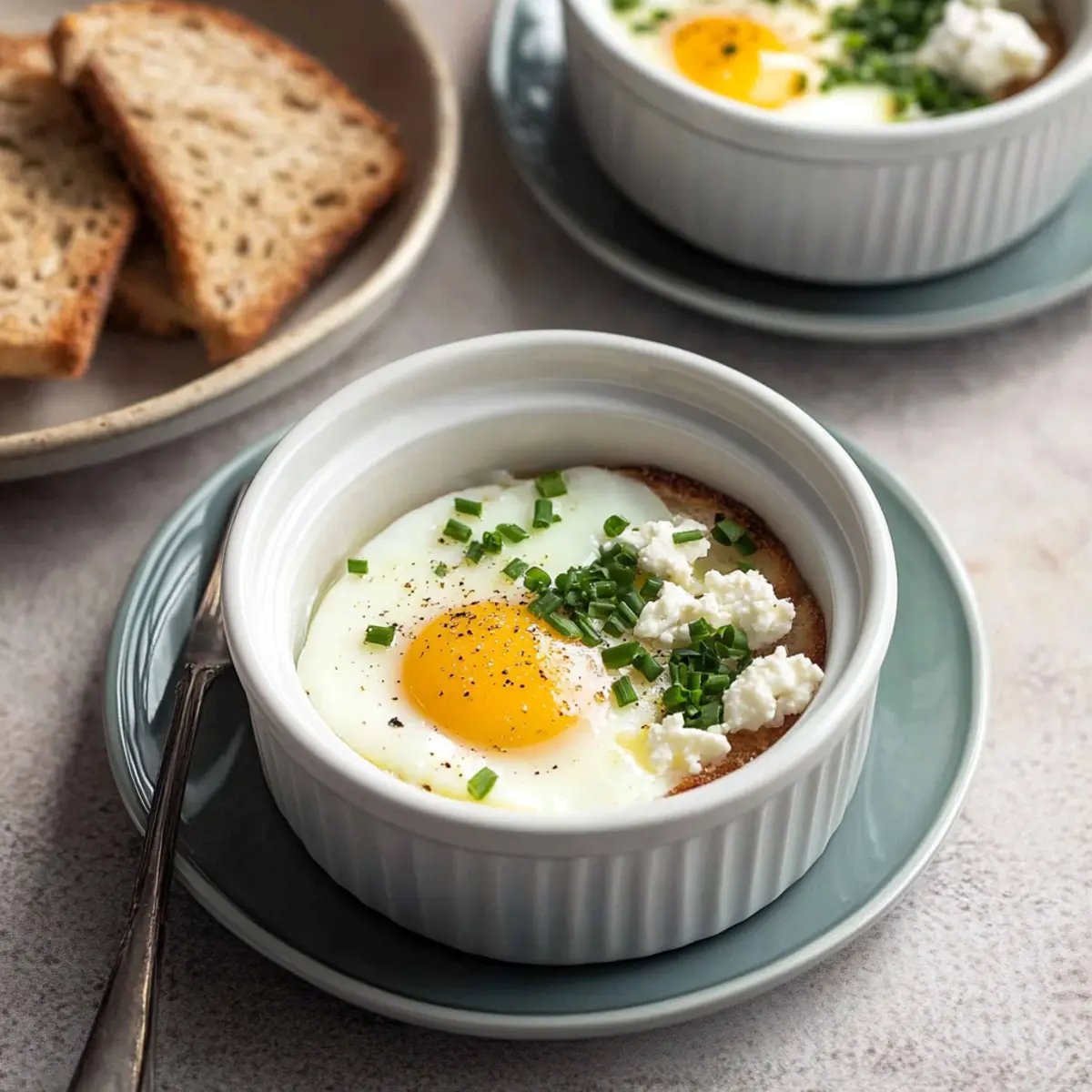
Sprinkle crumbled goat cheese over the eggs in each ramekin, followed by a dash of salt and freshly ground black pepper. Top with a few pinches of chopped chives or parsley for added freshness and flavor. These small touches will elevate the taste of your French Baked Eggs immensely.
Step 6: Arrange in the Baking Dish
Place the filled ramekins into a large baking dish, ensuring they are snug but not crowded. Once arranged, carefully fill the dish with the boiling water until it reaches halfway up the sides of the ramekins. This water bath (or bain marie) is essential for creating that perfect, creamy consistency.
Step 7: Bake for Perfect Yolk Consistency
Transfer the baking dish to the preheated oven and bake for 14-16 minutes. Keep an eye on the eggs; for runny yolks, remove them once they jiggle slightly, indicating soft whites and perfect yolks. If you prefer firmer yolks, add an additional 2-4 minutes to the bake time, checking regularly for doneness.
Step 8: Serve and Enjoy
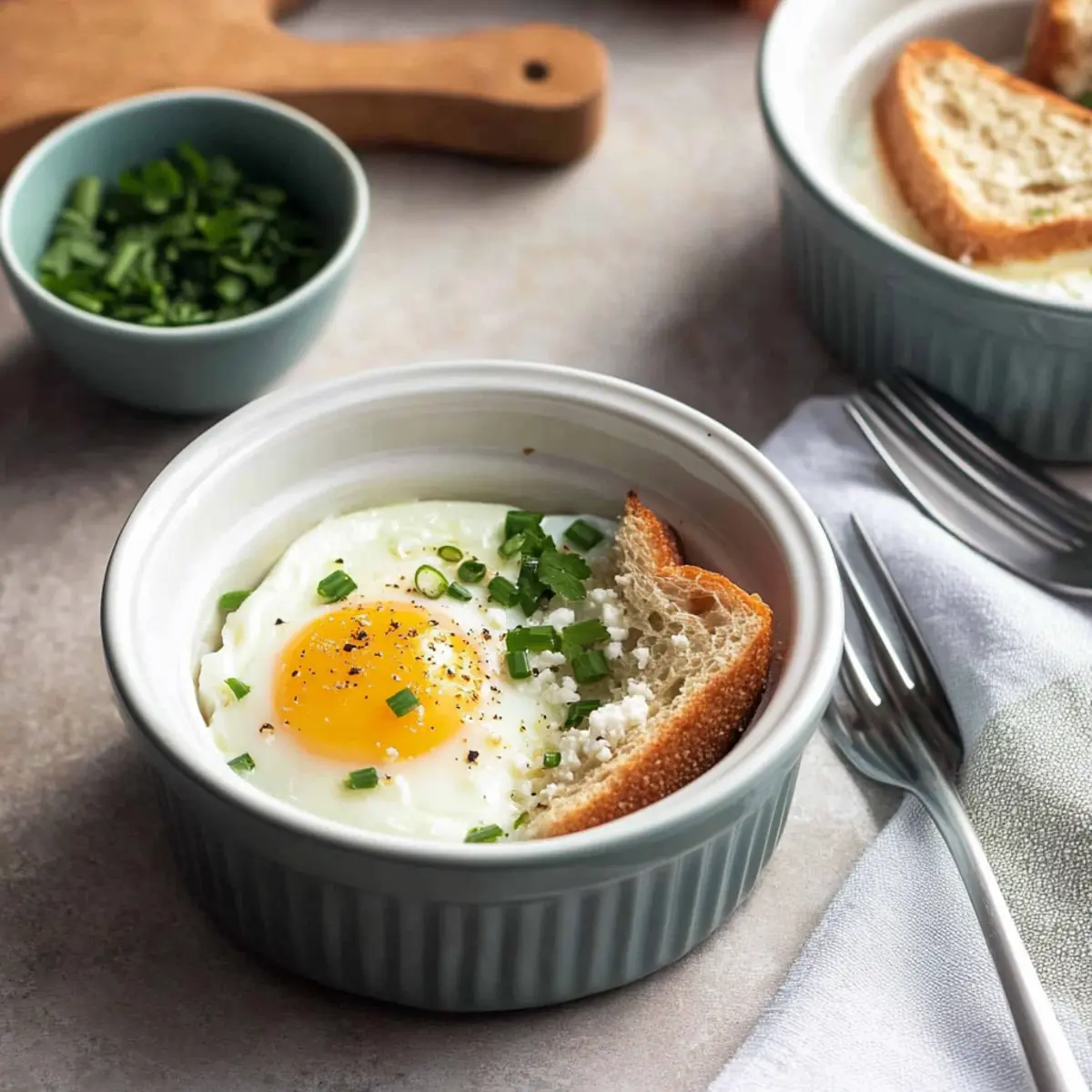
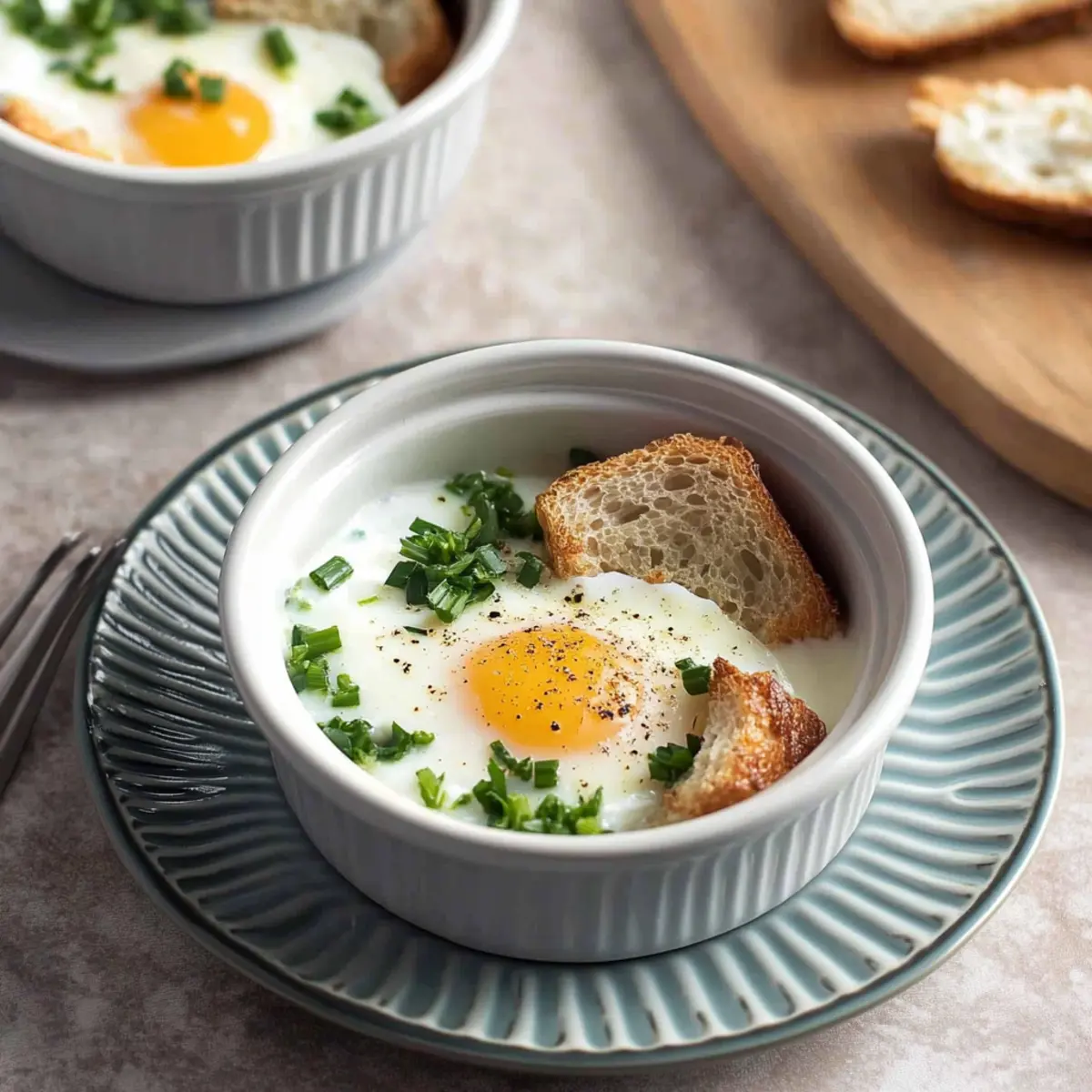
Once baked to your liking, carefully remove the ramekins from the hot water using tongs or a thick kitchen towel. Let them cool for a minute before serving. Pair these elegant French Baked Eggs with toasted bread for dipping, allowing everyone to indulge in the creamy goodness right out of the ramekins.
How to Store and Freeze French Baked Eggs
Fridge: Store any leftover French baked eggs in the fridge for up to 3 days in an airtight container. Reheat gently in the oven to maintain creaminess.
Freezer: While it’s best to enjoy these baked eggs fresh, you can freeze unbaked, assembled ramekins for up to 1 month. Thaw in the fridge and bake when ready to serve.
Reheating: If reheating leftovers, preheat your oven to 350°F (175°C) and warm the ramekins for about 10-15 minutes or until heated through.
Make-Ahead: To save time, prepare the ramekins without baking and refrigerate until you’re ready to pop them in the oven for a delightful brunch experience.
Expert Tips for French Baked Eggs
-
Don’t Overbake: Watch the time closely; a slight jiggle in the eggs signals they’re perfectly runny. Overbaking leads to rubbery eggs—no one wants that!
-
Use Room Temperature Eggs: Bringing your eggs to room temperature helps them cook evenly, ensuring creamy yolks and tender whites in your French Baked Eggs.
-
Water Bath Magic: The bain marie is crucial for even cooking. It creates a gentle steam environment that prevents the eggs from toughening, giving you soft, luxurious results.
-
Creative Toppings: Don’t hesitate to personalize! Adding sautéed vegetables or different cheese varieties can elevate flavor. Experimentation is encouraged!
-
Serve Immediately: French Baked Eggs are best enjoyed fresh out of the oven. If you’re prepping in advance, cover and store them in the fridge, then bake just before serving.
French Baked Eggs Customization Ideas
Unlock a world of flavors and textures by personalizing your French Baked Eggs!
-
Vegetable-Loaded: Add sautéed spinach, mushrooms, or even leftover roasted vegetables before cracking in the eggs for a hearty, nutritious twist.
A mix of vibrant vegetables not only enriches the dish but also adds delightful textures to each bite. -
Cheese Variations: Swap goat cheese for feta, ricotta, or aged cheddar based on your flavor preferences.
Experimenting with different cheeses can create a whole new taste experience, making every brunch feel special! -
Herb Medley: Try using fresh thyme, dill, or even a sprinkle of tarragon for a fresh, aromatic kick.
Each herb brings its unique flair, inviting you to explore diverse flavor profiles. -
Spicy Kick: Add a dash of red pepper flakes or a swirl of sriracha before baking for a spicy version.
This fiery touch balances the creaminess beautifully, tantalizing your taste buds with a gentle heat. -
Meat Lover’s Delight: Incorporate crispy bacon or smoked salmon for an indulgent upgrade.
Meaty additions can elevate the dish to a sumptuous feast, perfect for special occasions. -
Gluten-Free Pairing: Serve with gluten-free bread or roasted sweet potato slices for dipping into those creamy yolks.
This way, everyone can enjoy the delightful flavors without compromise on dietary preferences.
Curious about other delightful dishes? Try my Baked French Toast or Million Dollar Baked Ziti for more scrumptious meal ideas!
What to Serve with Delightful French Baked Eggs?
Elevate your brunch experience with these delightful pairings that harmoniously complement the creamy richness of baked eggs.
- Toasted Sourdough: Perfect for dipping, its crusty texture and tangy flavor balance the creaminess of the eggs.
- Mixed Green Salad: A fresh, zesty salad adds a bright crunch that contrasts beautifully with the rich baked eggs. Toss in a light vinaigrette, and you’ve got a refreshing accompaniment.
- Roasted Asparagus: The nutty flavors of roasted asparagus provide a tender, earthy side that enhances the overall dish aesthetic.
- Herbed Quinoa: A slightly nutty grain that offers a hearty base while absorbing flavors, making every bite more satisfying. A sprinkle of fresh herbs will take it to the next level.
- Crispy Bacon or Ham: For a savory kick, crispy bacon or thinly sliced ham adds a delightful crunch and salt, complementing the eggs’ creaminess and richness nicely.
- Fresh Fruit Platter: A colorful arrangement of fresh berries or melons provides a juicy, sweet contrast, cleansing the palate between eggy bites.
- Sparkling Wine: A glass of chilled sparkling wine or mimosa elevates the meal’s elegance, adding a festive touch to your brunch table.
- Chocolate Croissants: To satisfy the sweet tooth, flaky, warm chocolate croissants offer a decadent ending to this indulgent brunch experience.
Make Ahead Options
These French Baked Eggs are perfect for meal prep enthusiasts! You can assemble the ramekins by adding the butter, crème fraîche, and crumbled cheese, and then crack the eggs on top up to 24 hours in advance. Simply cover them with plastic wrap and refrigerate until you’re ready to bake. This way, when your brunch guests arrive, all you need to do is pop them in the oven for 14-16 minutes. To maintain that creamy texture, avoid letting the mixture sit out for too long and ensure the eggs are at room temperature before baking. With these make ahead options, you’ll have delicious French Baked Eggs with minimal effort, making your brunch gatherings truly effortless!
French Baked Eggs (Oeufs Cocotte) Recipe FAQs
How do I choose the right eggs for French Baked Eggs?
Absolutely! Fresh, large eggs are ideal for this recipe, ensuring a rich flavor and creamy texture. Look for eggs with clean, uncracked shells and a sell-by date within a few weeks. Bringing them to room temperature before baking helps achieve the best results.
What’s the best way to store leftover French Baked Eggs?
If you find yourself with leftovers, store them in the fridge in an airtight container for up to 3 days. Reheat gently in a preheated oven at 350°F (175°C) for about 10-15 minutes, so they stay creamy and delicious. This way, you can enjoy the comforting taste without compromising on quality.
Can I freeze French Baked Eggs?
Very! Although it’s best to enjoy them freshly baked, you can assemble unbaked ramekins and freeze them for up to 1 month. Just wrap them tightly in plastic wrap and aluminum foil. To bake, thaw in the fridge overnight and pop them into the preheated oven, following the normal baking instructions.
What should I do if my eggs turn out rubbery?
Don’t worry, it happens to the best of us! Rubberiness typically comes from overbaking. Next time, reduce the baking time by a minute or two and look for that slight jiggle in the egg whites as a cue for creaminess. Using a water bath (bain marie) is also essential, as it ensures even cooking!
Are French Baked Eggs suitable for everyone?
Yes, they are a wonderful gluten-free option! However, be cautious if you’re serving them to those with allergies, as they contain dairy and eggs. If needed, you can substitute crème fraîche with a dairy-free alternative like coconut cream or cashew cream, and use your favorite dairy-free cheese.
Can I prepare French Baked Eggs in advance?
Absolutely! To make your brunch easier, prepare the ramekins with crème fraîche, eggs, and cheese without baking, then cover with plastic wrap and refrigerate. When you’re ready, simply pop them in the oven for a fresh and delicious treat without the hassle!
Savory French Baked Eggs for Irresistible Brunch Bliss
Ingredients
Equipment
Method
- Preheat your oven to 350°F (175°C) and boil water in a kettle.
- Coat four 4 to 5-ounce ramekins with softened butter.
- Spoon an even layer of crème fraîche into each ramekin.
- Crack one large egg into each ramekin, being careful not to break the yolk.
- Sprinkle goat cheese over the eggs, add salt, pepper, and herbs.
- Place the filled ramekins in a baking dish and fill with boiling water.
- Bake for 14-16 minutes, checking for desired yolk consistency.
- Remove from water bath and serve immediately.
Leave a Reply