
As I poured the coconut milk into the pan, the air filled with an enchanting aroma that whisked me straight to the bustling markets of Thailand. The recipe I’m sharing today, Coconut Curry Salmon with Creamy Coconut Sauce, has quickly become a cherished favorite in my kitchen. With just 30 minutes of prep time, this dish transforms into a delectable meal that’s both healthful and satisfying. Not only is it gluten-free, but the combination of fresh salmon and rich coconut sauce creates a blissful harmony of flavors that impresses any crowd. Whether you’re a seasoned home chef or simply looking to break away from the usual takeout, this recipe invites creative twists—substituting salmon for chicken or chickpeas, or even experimenting with broiling and poaching methods. So, are you ready to dive into this vibrant culinary adventure?
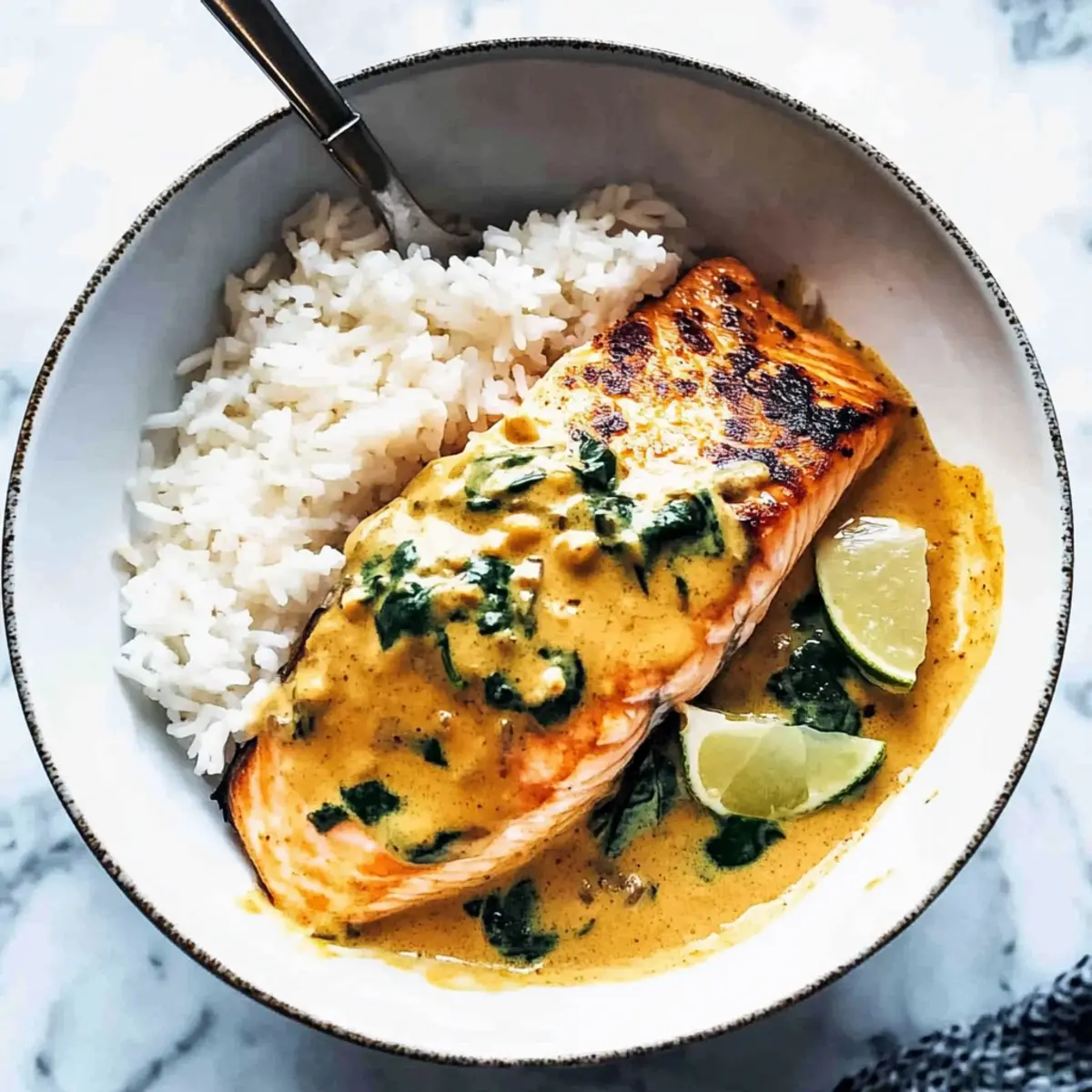
Why is Coconut Curry Salmon so special?
Rich, Flavorful Profile: The blend of creamy coconut milk and aromatic curry creates a tantalizing flavor sensation that transports you straight to Thailand.
Quick Preparation: This dish is ready in just 30 minutes, perfect for busy weeknights without sacrificing taste.
Versatile Ingredients: Easily swap salmon for chicken, shrimp, or chickpeas to cater to your cravings. If you’re seeking a nutritious boost, consider adding fresh spinach or seasonal veggies!
Crowd-Pleasing Appeal: This Coconut Curry Salmon is bound to impress family and friends, making it an ideal dish for gatherings. Serve with jasmine rice for a complete meal, or explore other pairings like a vibrant green salad. If you love Southeast Asian flavors, you might also enjoy my Coconut Basil Chicken for a delightful twist!
Coconut Curry Salmon Ingredients
To embark on this flavorful culinary journey, gather the following essentials!
For the Salmon
• Salmon – Fresh salmon is ideal for flavor and texture; opt for skin-on fillets for easy broiling.
• Sugar (Brown or White) – Balances flavors with sweetness; coconut sugar can offer an interesting twist.
For the Sauce
• Coconut Milk – Provides creaminess and richness; full-fat coconut milk delivers optimal flavor.
• Curry Powder – Adds warmth and depth; feel free to substitute with a homemade blend or your favorite store-bought version.
• Lime Juice – Brightens the dish; utilizing freshly squeezed juice enhances the overall flavor.
• Lemongrass Paste – Contributes a unique citrus-y flavor; lemon zest can be a handy substitute if lemongrass isn’t available.
• Garlic – Enhances aromatics; using fresh garlic and mincing it finely will elevate your dish.
• Ginger – Adds warmth and complexity; fresh ginger minced finely works best.
For the Veggies
• Spinach – For added nutrients and color; fresh spinach is preferred, but frozen can work in a pinch.
For Serving
• Rice – Serves as a base to soak up the curry sauce; jasmine or basmati rice pairs beautifully with the dish.
As you gather these ingredients, you’re just a step away from whipping up a dish that will definitely make your taste buds sing! Dive into this Coconut Curry Salmon adventure that’s not only gluten-free but also brimming with delightful flavors waiting to dance on your plate.
Step‑by‑Step Instructions for Coconut Curry Salmon
Step 1: Prepare the Salmon
Begin by patting the fresh salmon fillets dry with a paper towel, ensuring they’re moisture-free for optimal broiling. Rub each fillet generously with salt, pepper, and a hint of sugar to create a lovely balance of flavors. Allow the salmon to sit for about 10 minutes while you preheat the oven, giving the spices time to infuse.
Step 2: Preheat the Oven
Set your oven to broil at 450°F (232°C). This high temperature is essential for achieving that beautifully charred exterior on the salmon. While the oven heats, line a baking sheet with parchment paper or lightly grease it to prevent the fish from sticking. This step will make cleanup a breeze and ensure your Coconut Curry Salmon turns out perfectly.
Step 3: Make the Sauce
In a medium saucepan, heat a splash of oil over medium heat. Add minced garlic and ginger, sautéing for about 1-2 minutes until aromatic and golden. Pour in the full-fat coconut milk, followed by curry powder, lemongrass paste, and freshly squeezed lime juice. Bring the mixture to a gentle simmer, stirring occasionally, so the flavors meld beautifully.
Step 4: Broil the Salmon
Once the oven is preheated, place the salmon fillets skin-side down on the prepared baking sheet. Broil for approximately 7-10 minutes, keeping an eye on them until they’re opaque and the edges are slightly caramelized. The fish should flake easily with a fork when done, signaling that your Coconut Curry Salmon is perfectly cooked.
Step 5: Add Spinach to the Sauce
While the salmon is broiling, add fresh spinach to your simmering curry sauce. Stir gently until the spinach wilts down, which should take about 2-3 minutes. This will add vibrant color and nutrients to your dish, enhancing the overall presentation and flavor of your Coconut Curry Salmon.
Step 6: Serve
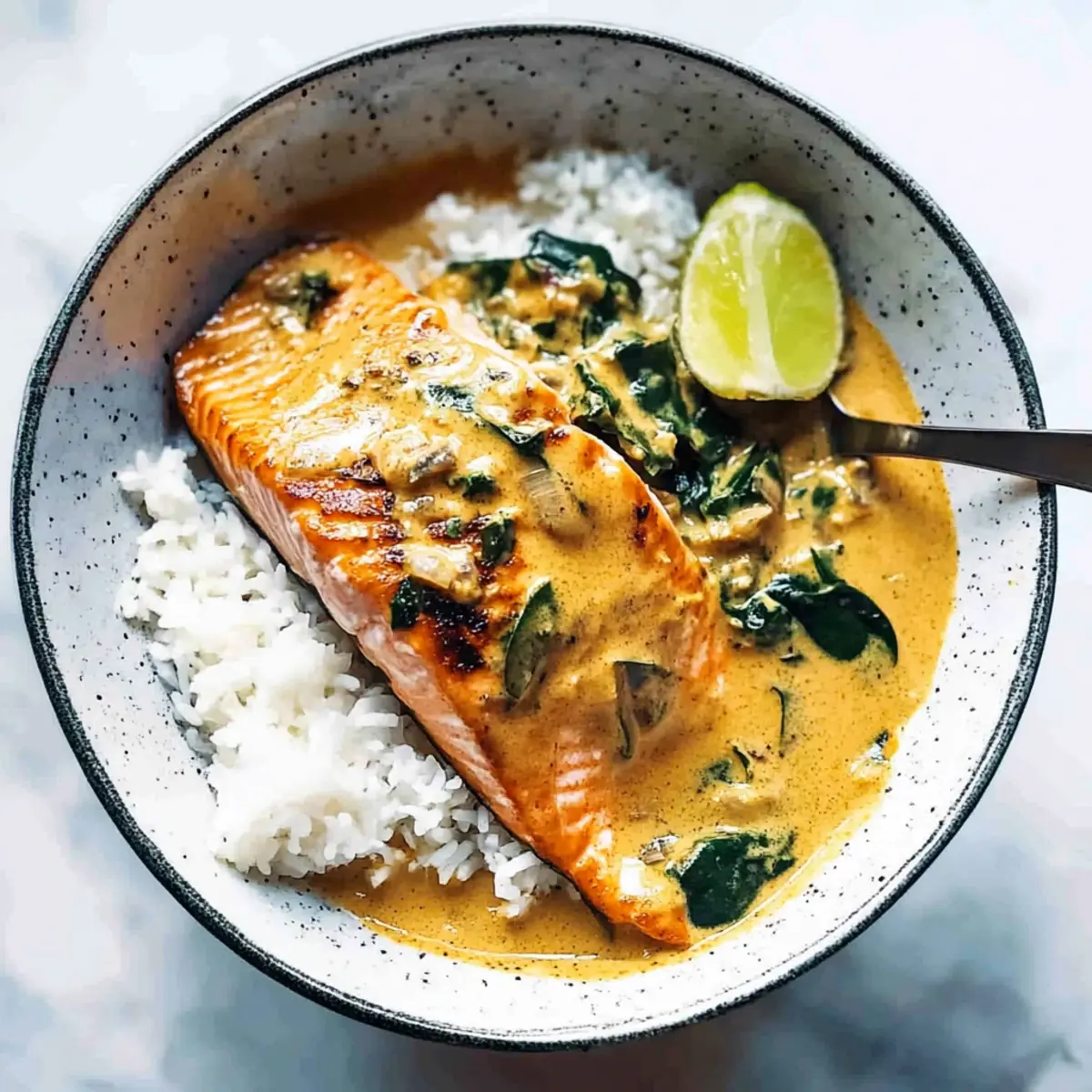
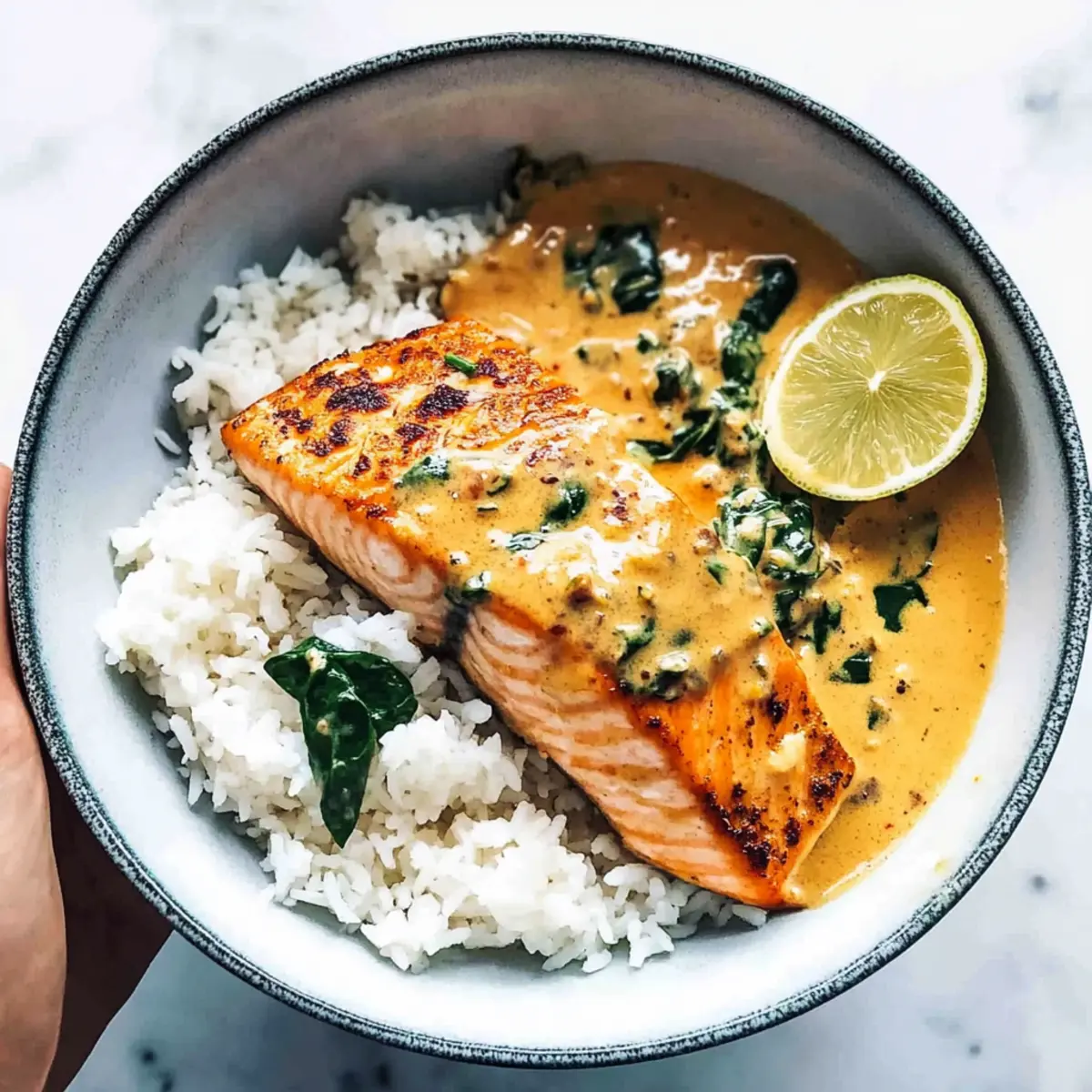
To serve, place a generous scoop of jasmine or basmati rice on each plate, then top it with the broiled salmon fillet. Spoon the creamy coconut curry sauce with wilted spinach over the fish, allowing it to cascade down and soak into the rice. This Coconut Curry Salmon creation is now ready to impress!
Make Ahead Options
These Coconut Curry Salmon meal prep options are perfect for busy weeknights! You can marinate the salmon with salt, pepper, and sugar up to 24 hours in advance. Simply wrap the seasoned fillets tightly in plastic wrap and refrigerate. Additionally, prepare the coconut curry sauce and store it in an airtight container for up to 3 days in the fridge. Just remember to reheat the sauce gently to maintain its creamy texture before serving. When you’re ready to enjoy, simply broil the marinated salmon for 7-10 minutes and mix in fresh spinach with the heated sauce for a quick, delicious meal that feels special yet requires minimal effort!
How to Store and Freeze Coconut Curry Salmon
Fridge: Store leftover Coconut Curry Salmon in an airtight container for up to 3 days. This will ensure the salmon and delicious sauce stay fresh and full of flavor.
Freezer: If you want to keep it longer, freeze the salmon and coconut curry sauce separately in airtight containers for up to 2 months. This preserves the taste and texture after thawing.
Reheating: To reheat, thaw overnight in the fridge and gently warm on the stove over low heat, adding a splash of coconut milk if needed to revive creaminess.
Room Temperature: Avoid leaving Coconut Curry Salmon out at room temperature for more than 2 hours to ensure food safety and keep those delectable flavors intact.
Expert Tips for Coconut Curry Salmon
-
Ingredient Freshness: Always opt for fresh ingredients, especially salmon, as it significantly enhances the flavor of your Coconut Curry Salmon dish.
-
Watch the Broiling: Keep a close eye on the salmon while broiling to avoid burning. The high heat can cook it quickly, so monitor closely for perfect results.
-
Flavor Balance: If you find the curry sauce too rich, add a touch more lime juice to brighten the flavors and balance out the creaminess from the coconut milk.
-
Experiment with Bases: While jasmine and basmati rice are traditional, feel free to serve the dish over quinoa or cauliflower rice for a different approach to your Coconut Curry Salmon.
-
Leftover Magic: If you have leftovers, don’t hesitate to turn them into a delicious wrap or salad the next day; just add fresh greens and a drizzle of lime.
What to Serve with Coconut Curry Salmon
Elevate your dining experience with these delightful pairings, perfect for a complete, satisfying meal.
-
Fluffy Jasmine Rice: A classic choice that absorbs the rich coconut curry sauce, making each bite a heavenly experience.
-
Crisp Green Salad: A refreshing counterpoint, the crunch and acidity from fresh veggies uplift the curry’s creamy texture. Toss in a zesty dressing for added brightness!
-
Sautéed Seasonal Veggies: Incorporate bell peppers or zucchini for extra nutrition and flavor. Their vibrant colors and textures create a feast for both the eyes and palate.
-
Toasted Coconut Flakes: Lightly toasted coconut adds a delightful crunch and enhances the dish’s tropical vibes. Sprinkling these on your finished meal will bring an extra layer of flavor.
-
Mango Chutney: A sweet and tangy condiment that brings a burst of flavor, perfectly complementing the curry’s warmth.
-
Coconut Milk Smoothie: A creamy, refreshing drink that ties in beautifully with your meal while keeping the coconut theme going.
-
Chilled Lemongrass Iced Tea: This fragrant, refreshing beverage pairs perfectly, adding a cooling contrast to the warm spices in the curry.
-
Mini Coconut Tarts: For dessert, these delightful bites are a sweet finish, echoing the flavors of your main dish in a fun and light way.
Coconut Curry Salmon Variations
Customize your Coconut Curry Salmon to suit your taste buds and pantry staples; the possibilities are endless!
- Chicken: Swap salmon for chicken thighs. They offer juicy tenderness and soak up the creamy curry beautifully.
- Shrimp: Use shrimp for a quicker protein option that cooks in just minutes, infusing the sauce with a delightful seafood flavor.
- Chickpeas: For a plant-based twist, chickpeas are a satisfying alternative, adding texture and a hearty element to the dish.
- Tofu: Substitute with firm tofu for a vegetarian option. Sauté it beforehand to give a golden crust and absorb those vibrant curry flavors.
- Vegetable Boost: Add seasonal veggies like bell peppers or zucchini for extra nutrition and a pop of color, enhancing the dish’s appeal.
- Curry Paste Variation: Switch from curry powder to red or green curry paste for an authentic Thai twist; each brings its unique heat and flavor profile.
- Broiling vs. Poaching: Experiment with poaching the salmon in the curry sauce for a more aromatic finish; it allows flavors to meld beautifully.
As you explore these variations, remember that each twist brings its unique story and flavor, making this dish a true reflection of your culinary journey. Whether you’re serving it alongside jasmine rice, or try pairing it with my delightful Baked Cod in Coconut Lemon Cream Sauce for a luxurious feast, there’s always room for creativity!
Coconut Curry Salmon Recipe FAQs
What type of salmon should I use for Coconut Curry Salmon?
Absolutely! For the best flavor and texture, opt for fresh salmon fillets. Look for vibrant, pinkish-orange flesh without any dark spots. Skin-on fillets are ideal for broiling, as they help keep the salmon moist and flavorful.
How should I store leftover Coconut Curry Salmon?
After enjoying your Coconut Curry Salmon, store any leftovers in an airtight container in the fridge for up to 3 days. This helps retain the recipe’s delightful flavors while keeping the salmon safe to eat. When you’re ready to enjoy it again, simply reheat gently on the stove or in the microwave.
Can I freeze Coconut Curry Salmon?
Certainly! To freeze your Coconut Curry Salmon, it’s a good idea to separate the salmon from the coconut curry sauce. Place both in airtight containers or freezer bags, ensuring as much air as possible is removed. They can be frozen for up to 2 months. When you’re ready to eat, thaw them in the fridge overnight, then gently reheat on low heat, adding a splash of coconut milk if needed to reintroduce the creamy texture.
What can I do if the sauce is too thick?
If you find your coconut curry sauce is thicker than desired, no worries! Simply add a tablespoon of water or additional coconut milk to loosen it up. Stir well over low heat until you reach your preferred consistency. You might even want to taste and adjust the spices if necessary, especially if you add more liquid.
Is Coconut Curry Salmon suitable for dietary restrictions?
Yes, this dish is gluten-free by nature! However, if you have specific allergies, be sure to check that all your ingredients are certified gluten-free. If you’re cooking for pets, avoid feeding them salmon cooked with significant spices or the curry sauce, as some ingredients can be harmful to animals.
What can I substitute for salmon in this recipe?
Very! If you’d like to switch things up, chickpeas, chicken, shrimp, or even tofu make excellent substitutes. For chicken, I recommend using boneless thighs or breasts, and for shrimp, use medium to large shrimp, adjusting cooking times to ensure they’re perfectly done. Enjoy experimenting with these tasty variations!
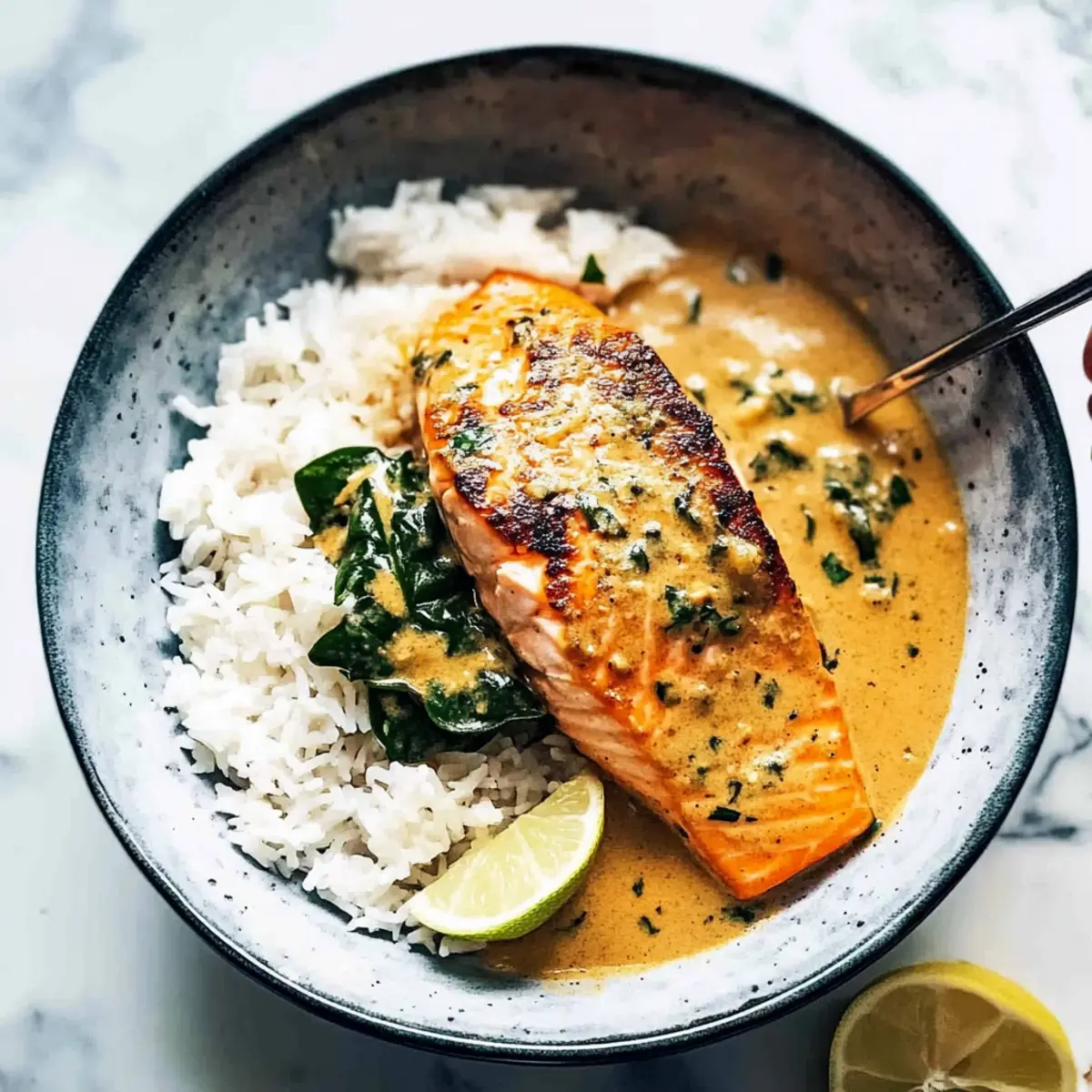
Creamy Coconut Curry Salmon: A Flavorful Home Delight
Ingredients
Equipment
Method
- Pat the salmon fillets dry with paper towels. Rub with salt, pepper, and sugar. Let sit for 10 minutes.
- Preheat oven to broil at 450°F (232°C). Line or grease a baking sheet.
- In a saucepan, heat oil and sauté minced garlic and ginger for 1-2 minutes until golden. Add coconut milk, curry powder, lemongrass paste, and lime juice. Simmer gently.
- Place salmon skin-side down on the baking sheet. Broil for 7-10 minutes until opaque and caramelized.
- Add spinach to sauce while salmon is broiling. Stir until wilted, about 2-3 minutes.
- Serve salmon over rice and spoon sauce and spinach on top.
Leave a Reply