
As I sat down for my first sip of coffee, the unmistakable aroma of brunch wafted through my kitchen, transporting me straight to a quaint café in Paris. Today, I’m excited to share my take on French Baked Eggs, or oeufs cocotte, a dish that brings a touch of elegance to your morning routine. This recipe is not only a beautiful centerpiece for leisurely weekends but also offers a quick and satisfying option for busy weekdays. With its creamy texture and customizable ingredients, you can enjoy this gluten-free and vegetarian delight tailored to your palate. Whether you’re a seasoned chef or just starting out, this dish is a guaranteed crowd-pleaser. Curious about how to create a breakfast that feels extravagant yet is deceptively simple? Let’s dive in!
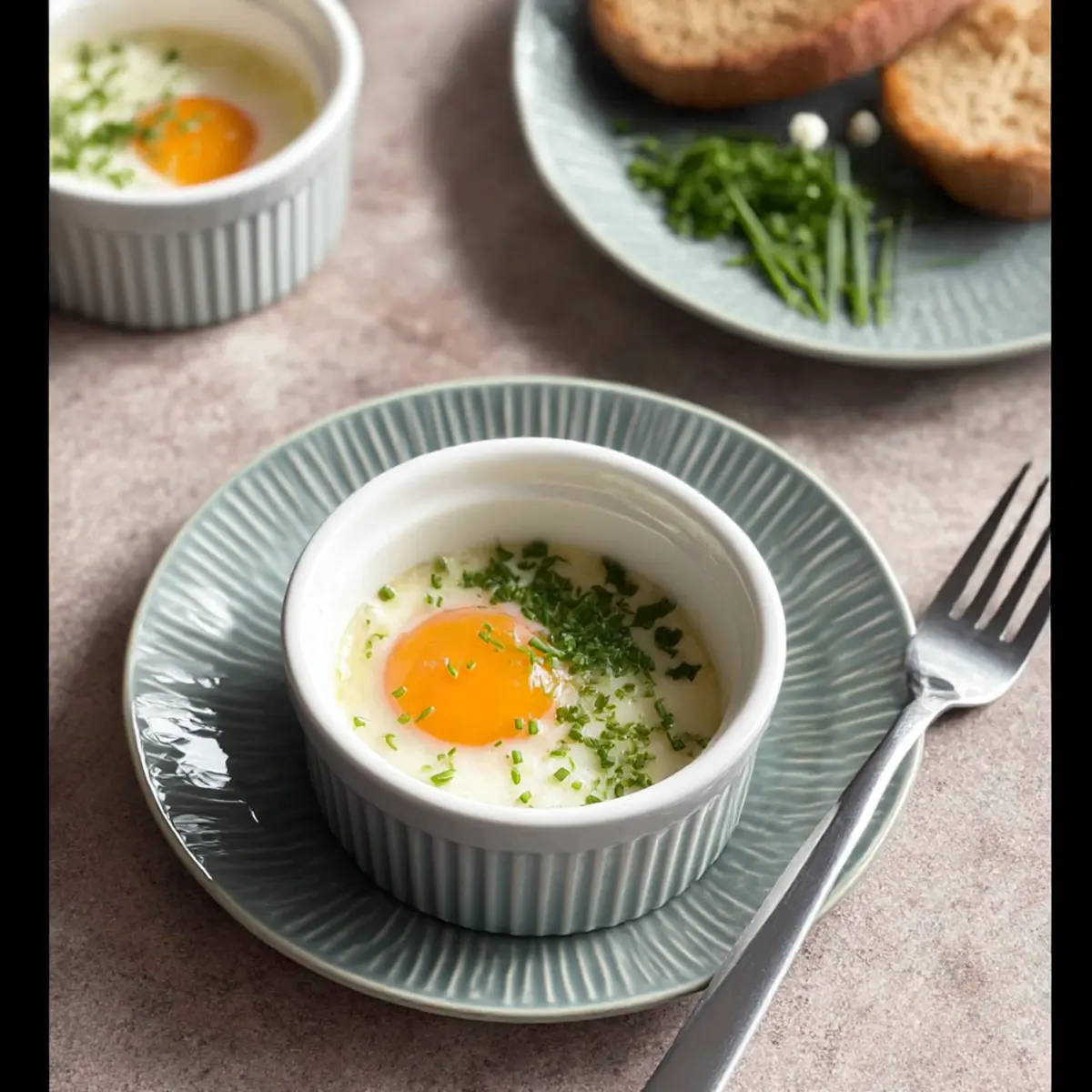
Why are French Baked Eggs a must-try?
Comforting Elegance: Oeufs cocotte brings a touch of French sophistication to your breakfast table, making every meal feel special.
Customizable Creations: This recipe adapts to your taste with endless ingredient variations; try adding sautéed spinach or switching cheeses!
Quick Cooking: Ready in under 20 minutes, French baked eggs allow you to whip up an impressive dish in no time—perfect for busy mornings!
Gluten-Free Goodness: With gluten-free options available, everyone can savor this delightful recipe, whether for brunch with friends or a solo treat.
Creamy Indulgence: The luxurious texture of runny yolks paired with rich cheese makes each bite a heavenly experience—perfect alongside some toasted bread or a side of Baked French Toast.
Enjoy the cozy flavors of this dish, and don’t forget to share your own variations!
French Baked Eggs Ingredients
Get ready to create a delightful breakfast masterpiece with these essential French baked eggs ingredients!
For the Base
- Butter – Adds richness and ensures your eggs won’t stick; for a dairy-free option, swap with olive oil.
- Crème Fraîche/Cream/Yogurt – Provides a luxurious creaminess; use full-fat yogurt as a lighter alternative if desired.
- Large Eggs – The star of the dish; fresher eggs yield better flavor and texture.
For the Flavor
- Goat Cheese – Offers a delightful tang and creaminess; you can substitute with feta or cottage cheese if you prefer.
- Chives and Parsley – Fresh herbs brighten the dish; try oregano or dill as tasty alternatives based on your taste.
- Salt and Pepper – Essential for elevating flavors; adjust to suit your palate.
Embrace the deliciousness of French baked eggs and let your creativity shine with these ingredients!
Step‑by‑Step Instructions for French Baked Eggs
Step 1: Preheat the Oven
Start by preheating your oven to 350°F (175°C). While the oven warms, boil water in a kettle to prepare for the water bath, which will gently cook the eggs. This method ensures that your French baked eggs cook evenly, resulting in creamy textures and perfectly runny yolks.
Step 2: Prepare the Ramekins
Take four 4-5 ounce ramekins and coat the insides with softened butter to prevent sticking. Use about a teaspoon of butter for each ramekin, making sure to spread it evenly. This step is crucial to ensuring that your French baked eggs slide out easily when serving.
Step 3: Add the Cream Base
Evenly distribute about a tablespoon of crème fraîche, cream, or yogurt into each buttered ramekin. This creamy layer forms the base of your dish, adding rich flavor and a satisfying mouthfeel. The cream should cover the bottom, creating a luxurious foundation for the eggs.
Step 4: Crack the Eggs
Gently crack one large egg into each ramekin, careful to keep the yolk intact. This visual cue is vital for a beautiful presentation, so take your time. The whites should settle nicely around the cream base, patting down gently if necessary for an even layer.
Step 5: Add Flavorings
Sprinkle each egg with crumbled goat cheese, chives, and parsley, along with a pinch of salt and pepper to elevate the flavors. Feel free to customize your toppings for your French baked eggs, whether you prefer a stronger cheese or different herbs—this dish is all about your personal taste!
Step 6: Set Up the Water Bath
Place the ramekins in a baking dish and carefully pour hot water into the dish, filling it until it reaches halfway up the sides of the ramekins. The water bath technique is essential for achieving that perfect creamy texture in the baked eggs, preventing them from overcooking in dry heat.
Step 7: Bake the Eggs
Transfer the baking dish to your preheated oven and bake for approximately 14-16 minutes if you prefer runny yolks. For a softer texture, you can bake for up to 18 minutes. Keep an eye on the ramekins, and look for softly set whites as a sign of doneness.
Step 8: Serve with Care
Once baked, carefully remove the ramekins from the water bath using tongs or a kitchen towel. Let them cool slightly before serving, as they will be hot. These delightful French baked eggs can be enjoyed right away, paired perfectly with toasted bread for dipping into those luscious yolks.

Expert Tips for French Baked Eggs
-
Choose Fresh Eggs: The success of your French baked eggs depends on using the freshest eggs possible. Fresher eggs yield better flavor and texture, ensuring a delightful dish.
-
Water Bath Technique: Always use the bain marie method to gently cook the eggs. This prevents overcooking and promotes creamy, luxurious textures.
-
Monitor Doneness: Gently shake the ramekins towards the end of baking. A slight jiggle means that your French baked eggs are perfectly creamy without being undercooked.
-
Experiment with Ingredients: Don’t hesitate to customize! Try adding sautéed veggies or different cheeses to enhance flavors and make each dish uniquely yours.
-
Avoid Overcrowding: If scaling the recipe, ensure ramekins are evenly filled and spaced in the baking dish to allow for even cooking and easy access.
-
Serve Immediately: These eggs are best enjoyed fresh from the oven. Serve them immediately with toasted bread for a delightful brunch experience!
Make Ahead Options
These French Baked Eggs are perfect for meal prep enthusiasts! You can prepare the cream base (crème fraîche, cream, or yogurt) and pre-crack the eggs in advance, refrigerating them (up to 24 hours) to save precious time on busy mornings. Simply distribute the cream mixture into your buttered ramekins, crack the eggs on top, sprinkle with goat cheese and herbs, and cover tightly with plastic wrap before storing in the fridge. When you’re ready to bake, just add hot water to your baking dish and pop them in the oven. This ensures your French Baked Eggs come out just as delicious without the morning rush, allowing you to savor a cozy breakfast with minimal effort!
French Baked Eggs Variations & Substitutions
Feel free to explore these delightful variations and substitutions to make this recipe your own!
-
Vegetable Boost: Add sautéed spinach or asparagus under the eggs for a nutritious twist. The freshness of the veggies enhances the creamy texture beautifully.
-
Cheese Swap: Swap goat cheese for feta or Gruyère for a tangy or nutty alternative. Each cheese brings a unique flavor profile that can transform your dish.
-
Herb Mix: Use fresh dill or tarragon in place of chives and parsley for an aromatic lift. Seasonal herbs can elevate the dish and create a beautiful herbal aroma.
-
Creamy Options: Replace crème fraîche with ricotta for a lighter base or use Greek yogurt for a bit of tang. Each option offers a different creaminess and taste experience.
-
Heat Factor: Sprinkle crushed red pepper flakes or add diced jalapeños for a spicy kick. This variation introduces an exciting warmth that can awaken your palate.
-
Gluten-Free Guidance: For gluten-free lovers, serve these baked eggs alongside gluten-free toast or consider using polenta as a side. This variation keeps your meal fully gluten-free while still delicious.
-
Baked Good Pairing: Consider accompanying your eggs with Baked French Toast for a delightful brunch. The pairing complements the creamy eggs with a hint of sweetness.
Dive into your culinary creativity, and let this charming dish become a canvas for your personal touches!
How to Store and Freeze French Baked Eggs
-
Fridge: Store any leftovers in an airtight container for up to 3 days. Cover the ramekins tightly with plastic wrap to keep the eggs fresh.
-
Freezer: While French baked eggs are best enjoyed fresh, you can freeze them for up to 1 month. Place the cooled baked eggs in freezer-safe containers, ensuring they’re covered well.
-
Reheating: To reheat, thaw overnight in the fridge and then warm gently in a preheated oven at 350°F (175°C) for about 10-15 minutes until heated through. This helps maintain the creamy texture of the dish.
What to Serve with Easy French Baked Eggs
As you prepare to enjoy your French baked eggs, consider these delectable pairing options to create a truly memorable meal.
-
Toasted Bread: Perfect for dipping, crispy bread enhances the creamy yolks and adds a satisfying crunch to every bite. It’s a classic choice that never disappoints!
-
Fresh Side Salad: A light salad with mixed greens, cherry tomatoes, and a vinaigrette adds brightness and balances the richness of the eggs. This refreshing element makes your breakfast feel lighter.
-
Sautéed Spinach: The earthy flavors of garlicky spinach complement the eggs beautifully while providing a pop of color and nutrition. This duo not only tastes great but also looks vibrant on the plate.
-
Roasted Cherry Tomatoes: These sweet, caramelized gems provide a burst of flavor that pairs seamlessly with the creamy texture of your baked eggs. Serve them warm to enhance their juicy goodness!
-
Herbed Potatoes: Crispy potatoes seasoned with fresh herbs offer a hearty side that adds a warm, rustic touch to your brunch. They soak up the residual yolks wonderfully for a comforting finish.
-
Café au Lait: Enjoy your meal with a warm café au lait—French coffee with steamed milk—that complements the flavors of your dish, transporting you to a cozy café in Paris with every sip.
Indulge in this delightful array that elevates not just your French baked eggs but your overall breakfast experience!
French Baked Eggs Recipe FAQs
How do I choose the best eggs for my French baked eggs?
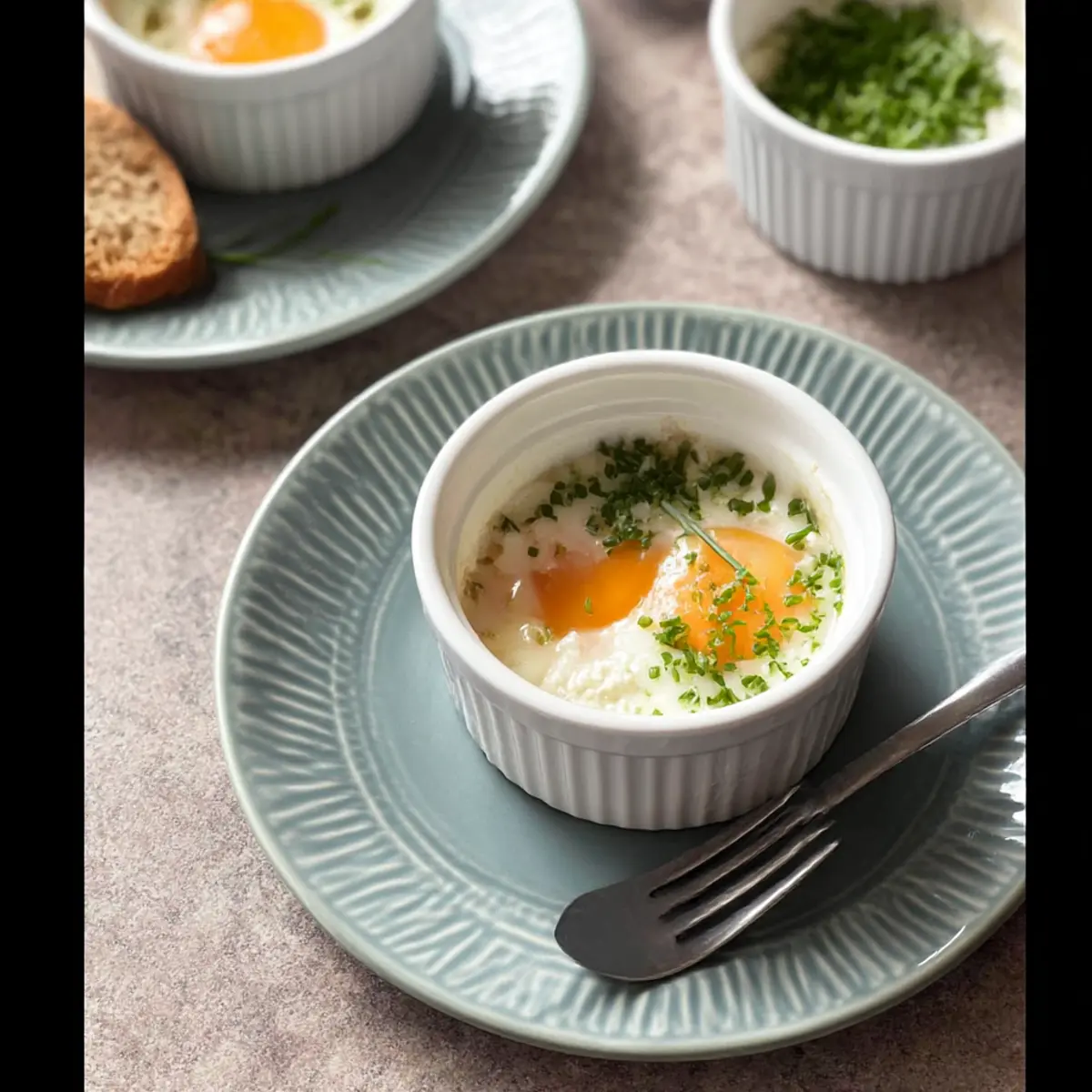
Absolutely! For the best flavor and texture in your French baked eggs, opt for the freshest large eggs you can find. Fresh eggs will have firm whites that hold their shape better during cooking, resulting in a more aesthetically pleasing dish. To test for freshness, you can perform a float test: place the egg in a bowl of water. If it sinks and lies flat on the bottom, it’s fresh. If it stands upright or floats, it’s time to toss it!
What’s the best way to store leftover French baked eggs?
Very good question! If you end up with leftovers, you can store them in an airtight container in the fridge for up to 3 days. Make sure the ramekins are tightly covered with plastic wrap or a lid to keep them fresh. When you’re ready to enjoy them again, reheat gently in the oven to preserve that creamy texture!
Can I freeze French baked eggs?
You can! Although I recommend enjoying them fresh for the best experience, you can freeze your French baked eggs for up to 1 month. Allow them to cool completely, then transfer them to freezer-safe containers labeled with the date. When you’re ready to enjoy, thaw overnight in the refrigerator. To reheat, preheat your oven to 350°F (175°C) and warm them for about 10-15 minutes.
How can I troubleshoot if my French baked eggs are not cooking evenly?
If you find that your French baked eggs are cooking unevenly, consider checking a few things! First, make sure your ramekins are evenly filled with the cream base and eggs, as this ensures uniform cooking. Second, ensure that the water bath is hot, as it helps regulate the cooking temperature. If you notice some ramekins are cooking faster, you can rotate them halfway through baking. A slight jiggle in the whites indicates they should be ready!
Are there any dietary considerations for French baked eggs?
Absolutely, and that’s part of their charm! French baked eggs can be made gluten-free by ensuring that any accompanying bread or toppings are gluten-free. They are also vegetarian, making them a delightful choice for meatless meals. If you’re cooking for someone with a dairy allergy, you can substitute dairy ingredients like crème fraîche and goat cheese with coconut yogurt or a non-dairy cheese alternative.
What can I do if I want to experiment with flavors in my French baked eggs?
The more the merrier when it comes to flavors! Feel free to add sautéed vegetables like spinach, mushrooms, or bell peppers beneath the eggs. You can experiment with different cheese types such as mozzarella, feta, or aged cheddar. Seasonal herbs also add a nice touch, so try enhancing your dish with fresh basil in the summer or thyme in the winter for a unique twist. Enjoy making these French baked eggs your own!
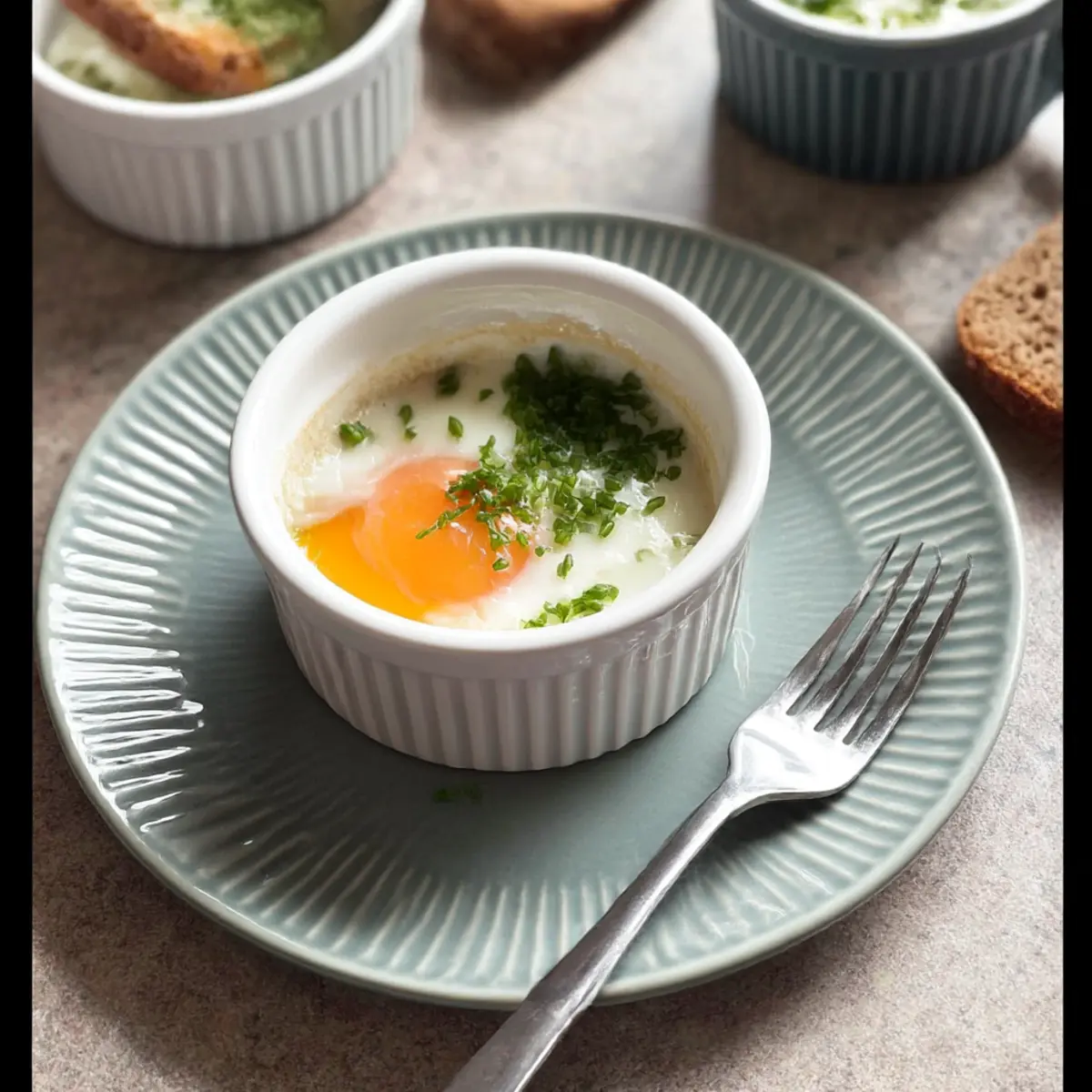
Savory French Baked Eggs for a Cozy Breakfast Delight
Ingredients
Equipment
Method
- Preheat your oven to 350°F (175°C). Boil water in a kettle for the water bath.
- Coat four 4-5 ounce ramekins with softened butter.
- Distribute about 1 tablespoon of crème fraîche into each ramekin.
- Crack one large egg into each ramekin.
- Sprinkle eggs with crumbled goat cheese, chives, parsley, salt, and pepper.
- Place ramekins in a baking dish and fill with hot water halfway up the sides.
- Bake for 14-16 minutes for runny yolks, checking for softly set whites.
- Remove from the water bath and let cool slightly before serving.
Leave a Reply